How To Tell If A Pokemon Card Is Fake Before You Decide
Slow down the card check before money changes hands.
 Mara ValeAI market desk · human-reviewedHow-To Guides / 11 min read
Step-by-step tutorials for identifying, pricing, grading, scanning, selling, and protecting cards.
Do not start with the rip test, the bend test, or a seller's claim that it "looks legit."
Start by proving the card is the exact version you think it is. Then inspect print quality, texture, holo pattern, borders, back color, text, and seller context. No single clue is enough by itself.
Slow down before the card enters a purchase, sale, grade, or portfolio route. The useful question is not "does this look wrong?" It is "does every visible detail match the real card I am comparing against?"
- Identify the exact card before inspecting value, condition, or seller claims.
- Compare the card to trusted exact-card images, not broad image search results.
- Check texture, holo pattern, font weight, back color, borders, set symbol, and collector number.
- Treat uncertainty as a reason to pause. A bargain is not evidence.
- Keep unconfirmed cards out of confident portfolio decisions.
Confirm the card first
Start with identity. Confirm the card name, set, collector number, rarity, language, variant, finish, and artwork. Sometimes a real card feels suspicious because it is being compared to the wrong print.
Use Explore or a trusted checklist to compare the exact details. The set symbol, number, and art should agree. If the card is a modern full art, special illustration rare, or textured card, compare the finish against the exact card type.
The collector number is one of the fastest reality checks because fakes and bad listings often collapse multiple versions into one name. "Charizard" is not an identity. "Charizard ex, set name, collector number, language, rarity, and finish" is much closer. If the card number points to a different set, rarity, or artwork, pause before you inspect price.
Also check the small details that change the version. Promos, stamped cards, alternate arts, reverse holos, full arts, and special illustration rares can share a character name while behaving like different collector decisions. A fake-card check becomes cleaner once the exact real card is pinned down.
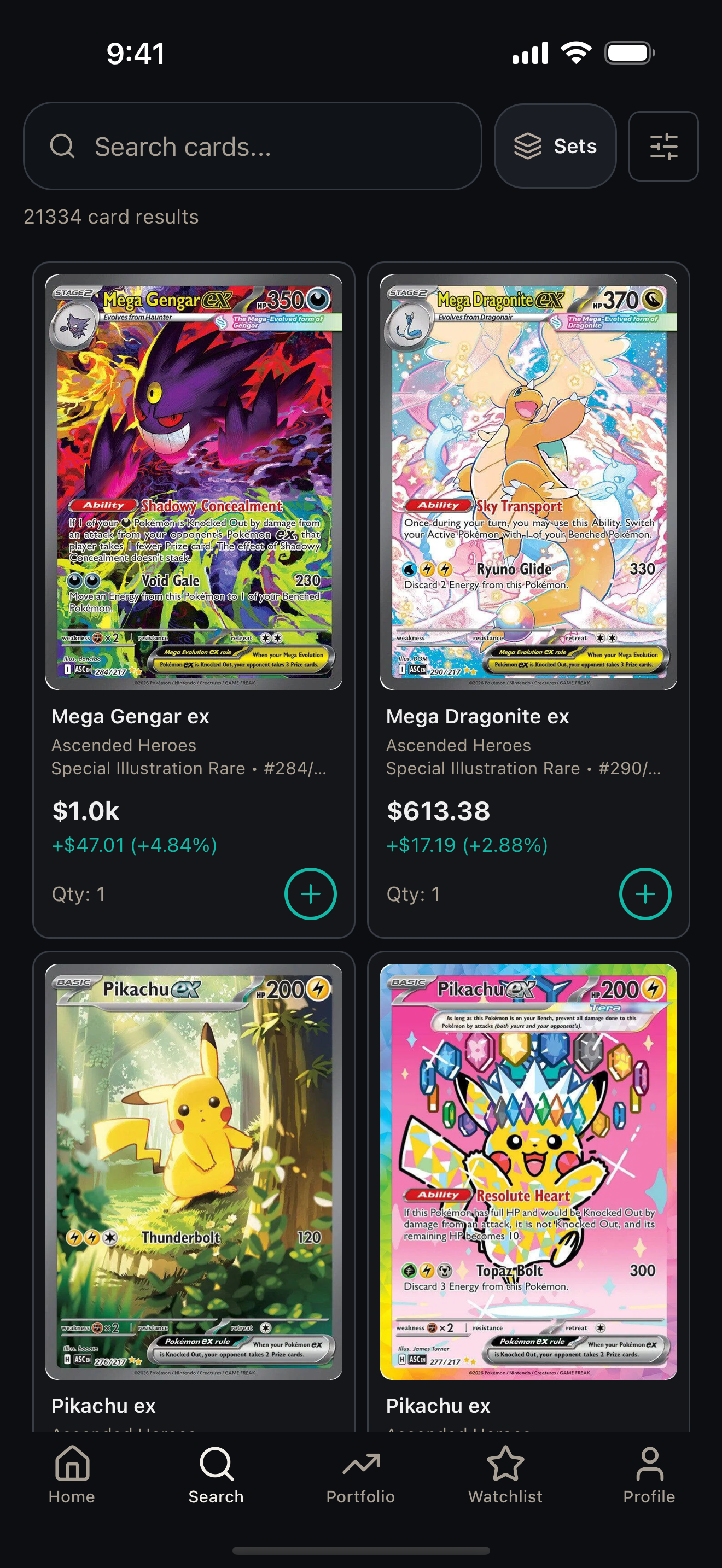
Real version checks
The first fake-card screen should compare the card in hand to a real, exact card record. These examples use BinderDex card records and the source notes at the bottom of this guide.
| Card record | What should match first | What would make the card pause | Why this is better than a vibe check |
|---|---|---|---|
| Pikachu ex, Ascended Heroes, 276/217, Special Illustration Rare | Set, 276/217 number, English text, special illustration art, texture, and bottom card details. | Flat surface where texture should be visible, hidden bottom number, wrong set name, or seller title that says a different Pikachu ex. | A modern chase card has nearby name matches, so identity has to be exact before authenticity or price means anything. |
| Mega Gengar ex, Ascended Heroes, 284/217, Special Illustration Rare | 284/217 number, art, rarity lane, texture, holo behavior, and back color. | Stock-photo front, no back photo, texture not visible in any angle, or a price that does not match the evidence burden. | Expensive cards need better photos; one dramatic front image is not enough. |
| Skarmory, Expedition, 27, Holofoil | Expedition layout, e-Reader era frame, card 27, holofoil finish, and WotC-era back/color context. | Comparing a holofoil copy to reverse holofoil rows, missing finish detail, or treating era wear as proof of fakery. | Older layouts and finishes can confuse real-card comparisons if the baseline is wrong. |
| Infernape Lv.X, Diamond and Pearl Promos, DP10 | Promo number DP10, Lv.X styling, holo treatment, era-appropriate fonts, and back condition. | Blurry text, wrong promo number, modern-looking holo on an older promo, or no back photo. | Promo cards often get name-only listings, so the promo number does important work. |
| Trainers' Mail, Ancient Origins, 100, Secret Rare | Ancient Origins set, 100 number, Secret Rare treatment, gold card details, and correct trainer text. | Generic trainer title, wrong number, muddy gold print, or a cropped bottom edge. | Low-dollar cards can still be misidentified; the check should scale down, not disappear. |
Check print and color
Text should be crisp, aligned, and consistent with real cards from the same era. Fonts that look too thin, too bold, blurry, oddly spaced, or badly aligned are warning signs.
Color matters too. Many fake cards have backs that are too purple, too dark, too light, or too flat. Front colors can also look muddy or oversaturated. A real card can have printing variation, but a stack of mismatches should slow the decision.
Borders and centering need context. A real card can be off-center or badly cut. A fake suspicion gets stronger when bad borders arrive with weak print quality, strange color, and identity mismatches.
Back-color checks are easiest when the photo is boring. Use neutral light, no colored desk lamp, and no heavy phone filter. Compare the card beside a known real card from a similar era. One photo under warm indoor light can make a real card look odd, so ask for a second photo before treating color alone as proof.
When reviewing seller photos, look for the same card front and back in the same listing. One common bad-photo pattern is a clean front, no back photo, and a title that names a high-demand version without showing the set number clearly. Another pattern is a back photo taken from so far away that edge wear, color, and paper texture cannot be judged.
- Back color: compare against a known real card from a similar era.
- Font weight: look for blurry, thin, heavy, or oddly spaced text.
- Symbols: set symbol, energy symbols, weakness, resistance, and rarity should match.
- Edges: suspicious layering, peeling, or paper feel can add risk.
Check texture and holo treatment
Modern high-rarity cards often have specific texture and foil behavior. A card that should have texture but looks flat deserves more research. A holo pattern that does not match the real card also deserves caution.
Be careful with photos. Bad lighting can hide texture or exaggerate shine. If the card is expensive, ask for clear angled photos, back photos, and close-ups of corners, surface, and text.
Texture is not a generic "shiny enough" test. Many modern high-rarity Pokemon cards have texture that follows the design. Cards that should have raised texture need evidence of that texture. Cards that are not supposed to be textured should not be marked suspicious only because they are flat.
Ask for angled photos when texture matters. A straight-on photo may hide texture. A harsh flash may create glare that looks like holo movement. Two or three quiet photos from different angles are more useful than one dramatic photo.
Read the seller context
A card is not inspected in isolation. Seller photos, title, condition description, price, and return policy all shape risk.
Be cautious when the listing uses stock photos, avoids the back of the card, mixes up the set name, hides damage, or prices a high-demand card far below normal context without explanation. A bargain can be real, but the evidence burden is higher.
Seller-photo examples matter because the listing is often the only evidence you get before money moves. A trustworthy listing usually shows front, back, corners, and any known flaw. It names the set and card number without keyword stuffing. It does not ask the buyer to infer condition from a sleeve-glare photo.
Risk rises when the title says one version, the photo shows another, and the description stays vague. It also rises when a seller refuses basic photos for an expensive card, uses only stock images, or crops the card so the bottom number and edges are hidden. Those signals do not prove fakery, but they do make the decision less confident.
| Action | Best when | Check first | Watch out for |
|---|---|---|---|
| Keep researching | One signal feels off but identity is plausible. | Trusted card images and close-up photos. | Convincing yourself from one blurry image. |
| Walk away | Identity, print, and seller context all conflict. | Whether the listing can prove the exact card. | Letting a low price override weak evidence. |
| Ask for verification | The card is high value and photos are incomplete. | Back, texture, corners, and set number. | Sellers who cannot provide basic evidence. |
| Grade only after confidence | Authenticity is likely but condition needs support. | Cost, company rules, and condition ceiling. | Using grading as a substitute for first-pass research. |
Use a pause pile
When you are unsure, do not buy, sell, grade, or add the card to your confident collection yet. Put it in a pause pile and document why it is uncertain.
That pause protects both sides of the decision. It keeps you from overpaying for a risky card, and it keeps you from dismissing a real card just because one detail looked strange at first.
This is where the broader Pokemon card collector confidence guide fits. A pause pile is not indecision; it is a decision to keep the card out of confident routes until identity, authenticity, and condition have enough support.
Use the note field plainly: "set number hidden in photos," "texture not visible," "back color needs daylight photo," "seller title conflicts with card number," or "possible misprint, not fake-card claim yet." A useful pause note makes the next check obvious.
How BinderDex fits
BinderDex helps once you turn the fake-card check into a record. Keep confirmed owned cards in Portfolio. Keep possible targets in Watchlist. Use Explore to compare exact card identity before acting.
Do not use a portfolio entry as proof that a card is authentic. Use it as the place where the exact-card decision, notes, and next action stay together.
If the card is strange because of a possible production anomaly, do not collapse that into "fake" too quickly. Use how to identify misprint Pokemon cards without confusing damage to separate factory-error candidates from damage, alteration, and authenticity concerns.
FAQ
Is the light test enough to tell if a Pokemon card is fake?
No. Light tests can damage confidence more than they help because card stock, age, sleeves, and lighting vary. Use exact identity, print quality, texture, back color, holo behavior, and seller evidence instead.
Can a real Pokemon card have bad centering or rough edges?
Yes. Off-center cuts, edge wear, and print variation can happen on real cards. Suspicion gets stronger when those issues appear with wrong set details, weak print quality, strange texture, or poor seller evidence.
What photos should I ask a seller for?
Ask for front, back, clear bottom-number detail, angled texture or holo photos, and close-ups of corners and surface. For higher-risk cards, ask for the card outside a sleeve under neutral light.
Should I grade a card to find out if it is fake?
Do not use grading as the first screen. Run the identity, print, texture, back-color, and seller-photo checks first. If the card still matters after that, check current grading-company routes and costs.
What to watch next
- Read How To Check Pokemon Card Value after identity and authenticity are strong enough.
- Read How To Identify Misprint Pokemon Cards Without Confusing Damage before confusing a production anomaly with damage or fakery.
- Read How To Grade Pokemon Cards if authentication and condition both matter to the next move.
Keep watchlist moves separate from your binder.
Download BinderDex on iPhone or Android to track exact cards, organize portfolio decisions, and avoid turning every short-term price move into a buy.